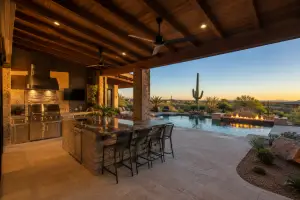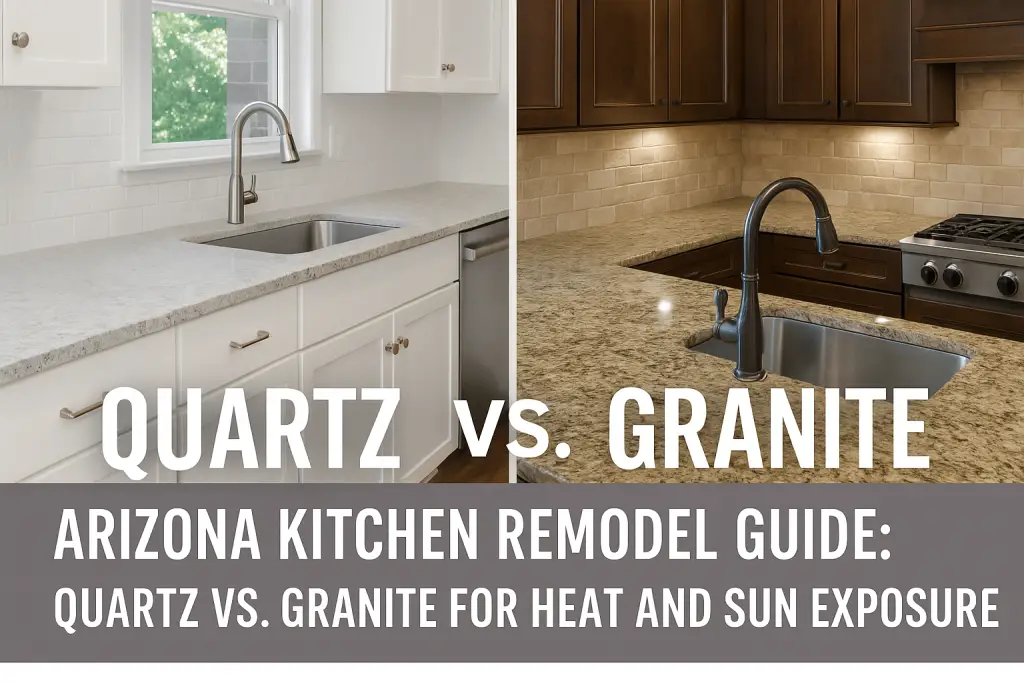
Choosing the best kitchen countertops for Arizona heat is about a lot more than picking a pretty surface. If you have lived through a Phoenix summer, you already know your home feels like it is in a constant battle with the sun. Kitchens get extra punishment, with big windows acting like magnifying glasses and hot air lingering even when the AC is running full blast. That means your countertop is not just a design choice. It is a durability test that can make or break the way your kitchen looks over time.
Quartz and granite are the two top contenders most Arizona homeowners turn to, and at first glance, they seem almost interchangeable. Both are beautiful, both promise long-term value, and both come in styles that can completely transform your kitchen. But under desert conditions, not every countertop performs the same. Some materials handle high heat and UV rays better, while others need extra care to keep from fading or showing wear.
This guide takes a close look at how quartz and granite really hold up in Arizona’s unique climate, not just how they look under showroom lights. Whether you are dreaming of a sleek modern kitchen or a natural, earthy design, this comparison will help you make a choice that not only looks amazing on day one but continues to look and perform beautifully for years of hot, sunny days to come.
Arizona kitchens face challenges that homeowners in cooler climates never have to think about. The desert sun beats down almost every day of the year, and it does not stop once it shines through your kitchen windows. Constant UV exposure can fade certain countertop materials over time, making them lose that fresh, just-installed look. Pair that with long stretches of triple-digit heat and you have a recipe for stress on your kitchen surfaces.
Even the way your home cools at night matters. The big temperature swings between scorching afternoons and cooler desert evenings can cause some materials to expand and contract. Over the years, that can lead to cracks, warping, or seams that start to shift. Arizona kitchens also see plenty of outdoor entertaining, and if your countertops extend to a patio or barbecue area, the heat exposure is even more intense.
That is why choosing a countertop for a Phoenix or Scottsdale remodel is not just about color or pattern. You need a material that can take the heat, resist UV damage, and stay strong despite temperature changes. Quartz and granite both offer durability, but their performance under these conditions is not identical. Knowing how each one reacts to Arizona’s unique climate is the first step to making the right choice for your home.
Quartz Countertops in Arizona Kitchens
Quartz countertops are a favorite in many modern Arizona kitchens because they offer a clean, polished look with plenty of color and style options. Quartz is an engineered material made from crushed stone mixed with resin, which gives it a smooth, consistent finish that is easy to match with any design style. In day-to-day use, quartz is tough, non-porous, and very easy to keep clean, which is a big plus in a busy family kitchen.
When it comes to handling Arizona’s heat, quartz performs well under normal cooking conditions. Setting down a warm pan or baking sheet is usually no problem. However, quartz is not completely heatproof. The resin that holds it together can be sensitive to very high temperatures. If you place a scorching-hot pan straight from the stove or oven on a quartz countertop, especially in a kitchen that already runs hot during summer, you can risk leaving a burn mark. Using trivets or heat pads is the safest choice to keep quartz looking perfect for years.
The desert sun is another factor to consider. Quartz can fade or yellow over time if it is exposed to direct sunlight for hours every day, particularly in kitchens with large windows or skylights. This is not a dealbreaker, but it is worth noting if your counters sit in a bright, sun-soaked spot.
Overall, quartz is a durable, low-maintenance, and stylish choice for Arizona kitchens as long as you give it a little protection from extreme heat and UV rays. With the right care, quartz countertops can keep their sleek appearance despite the desert climate.
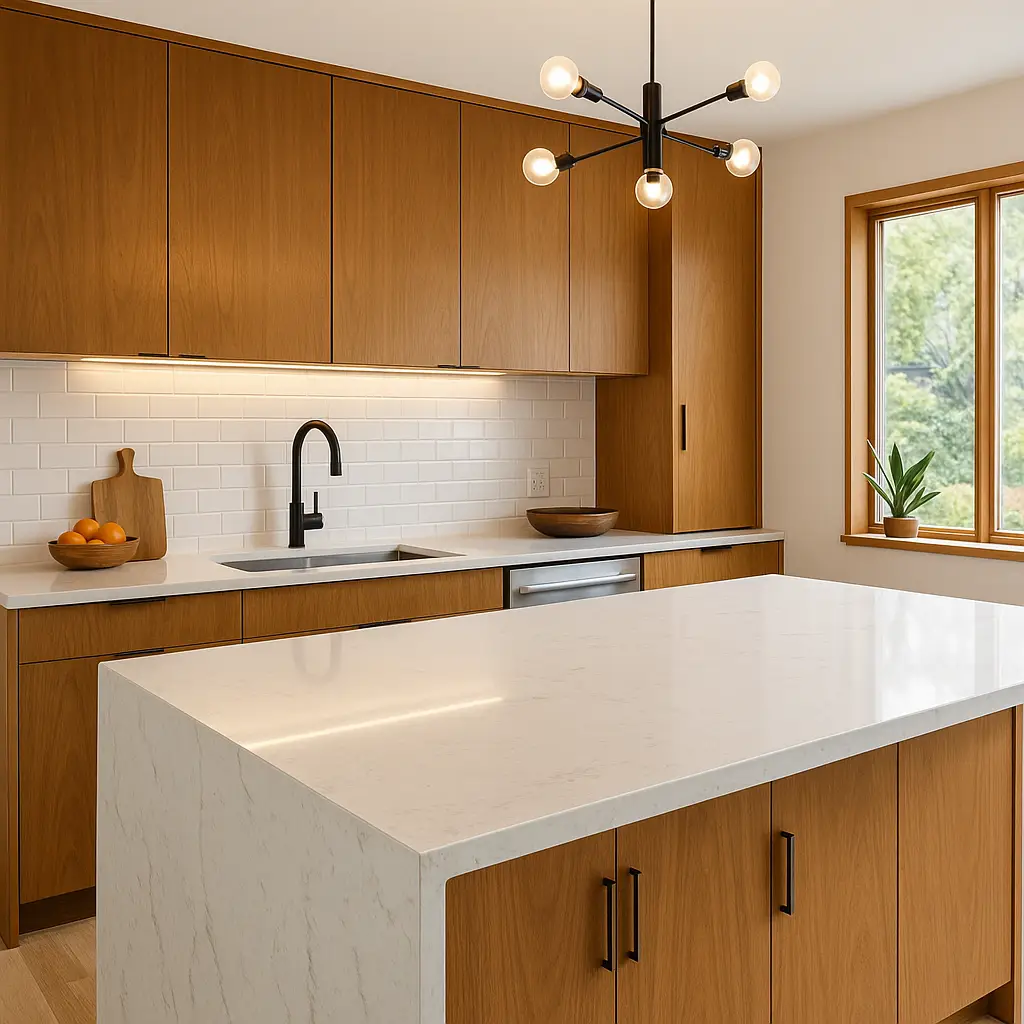
Granite Countertops in Arizona Kitchens
Granite has been a go-to countertop choice for decades, and for good reason. This natural stone is known for its strength, unique patterns, and ability to handle just about anything a busy kitchen throws its way. Each granite slab is one-of-a-kind, which means you get a completely custom look that adds natural beauty and value to your home.
When it comes to heat, granite shines in Arizona kitchens. It can withstand high temperatures much better than quartz because it is formed deep within the earth under intense heat and pressure. Setting a hot pan or pot directly on a granite countertop is far less likely to cause damage, making it a great choice for families who cook a lot or love to entertain.
Granite also holds up well under the Arizona sun. It is much less prone to fading or discoloration, even in kitchens with big, sunny windows or outdoor kitchen spaces. The only real requirement for granite is sealing. Because it is a natural stone, it can absorb liquids if it is not sealed properly, which can lead to staining over time. A quick reseal once or twice a year usually keeps it in top shape.
For homeowners who want a countertop that handles heat without worry and stays beautiful in Arizona’s bright, dry climate, granite is hard to beat. It brings timeless style, natural charm, and serious durability to any kitchen remodel.
Quartz vs Granite: Which is Better for Arizona Heat?
Both quartz and granite make beautiful kitchen countertops, but when you live in Arizona, you need to look past appearances and think about how each one really performs under the desert sun.
If heat resistance is your top priority, granite is the clear winner. This natural stone can handle hot pans, long afternoons of direct sunlight, and the big temperature swings Arizona is known for. Quartz is still a strong, durable option, but the resin in its makeup makes it a little more sensitive to extreme heat and UV exposure. With quartz, you will want to use trivets for very hot cookware and keep it out of direct sunlight as much as possible to avoid discoloration over time.
When it comes to maintenance, quartz is the easier choice. It does not require sealing and is naturally non-porous, so it resists stains and bacteria with just simple cleaning. Granite needs periodic sealing to protect it from spills, but many homeowners find the upkeep minimal compared to its long-lasting durability.
Cost often depends on the specific slab or style you choose. Quartz prices are usually consistent, while granite can range from budget-friendly to high-end depending on rarity and pattern. Both materials add value to your home, especially in the Phoenix and Scottsdale real estate market, where upgraded kitchens are a big selling point.
The bottom line is that granite edges out quartz for Arizona’s toughest heat and sunlight conditions, but quartz is still an excellent choice if you love its look and are willing to give it a little extra care. Either way, choosing a high-quality material and having it professionally installed will make sure your kitchen remodel stands the test of time in the desert climate.
Expert Tips for Choosing the Best Countertop in Phoenix
Picking between quartz and granite for an Arizona kitchen remodel can feel overwhelming, especially with so many colors, finishes, and price points to sort through. A few expert tips can help you narrow it down and choose the countertop that will stand up to the desert climate and fit your lifestyle.
Start by looking at where the sun hits your kitchen throughout the day. If you have big windows or skylights that flood your counters with sunlight, granite will handle UV exposure better and keep its color longer. If your counters are mostly shaded, quartz becomes a more practical option with its low maintenance and sleek, uniform look.
Next, think about how you cook and entertain. If you are constantly moving hot pans, baking trays, or cast-iron skillets from the oven to the countertop, granite gives you more peace of mind. If you prefer quick cleanups, stain resistance, and a modern, polished finish, quartz will make your day-to-day kitchen routine easier.
Budget also plays a role. Granite prices can vary a lot depending on the slab, while quartz tends to be more predictable. Always ask your contractor to show you full slabs, not just small samples, since lighting can change the look of both materials dramatically once installed in your kitchen.
Finally, choose a professional installer who understands how Arizona’s heat, dryness, and temperature shifts can affect countertop materials. The right team will know how to seal granite properly or secure quartz to prevent future cracking or warping. With the right guidance and a little planning, you can create a kitchen that looks stunning and stands strong through years of Arizona summers.
Final Thoughts: Choosing the Right Countertop for Arizona Heat
When it comes to kitchen remodels in Arizona, your countertop choice has to do more than just look good on day one. It needs to handle the kind of heat and sunlight that only the desert can deliver. Granite takes the top spot for heat resistance and sun exposure, while quartz offers easy maintenance and a wide range of design options if you’re willing to give it a little extra care.
At the end of the day, there’s no one-size-fits-all answer. The best countertop for your Arizona kitchen depends on your home’s sunlight exposure, how much you cook, and the style you want to bring into your space. Both quartz and granite can be excellent long-term investments when they’re selected thoughtfully and installed by professionals who understand the challenges of a Phoenix climate.
If you’re ready to remodel your kitchen and want expert advice on choosing the right countertop, Drill Renovations is here to help. Our team specializes in Arizona home renovations and knows how to design kitchens that stay beautiful and functional through years of desert heat. Reach out today to schedule a consultation and start building the kitchen that works perfectly for your family and your Arizona lifestyle.
Ready to Start Your Kitchen Remodel? Contact Drill Renovations Today
Choosing between quartz and granite is just one step in creating a kitchen that works beautifully in Arizona’s unique climate. At Drill Renovations, we help Phoenix homeowners design and build kitchens that look amazing, stay cool, and stand up to years of desert heat. Whether you need expert advice on countertop materials, a full kitchen remodel, or a reliable contractor who understands Arizona homes, our team is here to guide you every step of the way.
Contact us today to schedule your free consultation and start planning a kitchen remodel that’s built to last in the Arizona sun.
FAQ: Granite vs. Quartz in Arizona
What is the upkeep on quartz countertops?
Quartz countertops are low-maintenance and easy to care for. Because they are non-porous, they resist stains and bacteria without needing sealing. Daily cleaning with mild soap and water is usually all that’s required. In Arizona homes, where dust is common and kitchens can heat up, quartz may benefit from occasional polishing to maintain its shine, but it requires far less upkeep than natural stone options.
What is the upkeep on granite countertops?
Granite countertops are durable but need a little more attention than quartz. Granite is porous, which means it should be sealed about once a year to prevent staining and bacteria buildup. Day-to-day cleaning with a gentle, non-acidic cleaner keeps it looking great. In Phoenix homes, regular sealing is especially important because dry air and frequent use can wear down the protective barrier faster than in cooler, more humid climates.
Do quartz countertops fade in the Arizona sun over time?
Yes, prolonged exposure to direct sunlight can cause some quartz countertops to fade or yellow slightly over time. The resin used to bind quartz is not as UV-resistant as natural stone. In kitchens with large windows, skylights, or outdoor installations, it’s a good idea to use window coverings or choose UV-protected quartz to help maintain the color for years to come.
Can granite countertops crack in Phoenix heat?
Granite is extremely heat-resistant, which makes it an excellent choice for Arizona kitchens. It’s unlikely to crack from heat alone, even with hot pans placed directly on the surface. However, like all natural stone, granite can crack if it experiences sudden, extreme temperature changes or if it’s improperly installed. Professional installation is key to ensuring it withstands Arizona’s hot climate without issue.
Which countertop material handles outdoor kitchens better in Arizona?
Granite is generally the better choice for outdoor kitchens in Arizona. Its natural stone composition can handle high temperatures, UV exposure, and changing weather conditions far better than quartz, which can discolor or weaken with constant sun exposure. If you want a countertop that will last for years in an uncovered outdoor space, sealed granite is the most reliable option.
Which countertop adds more resale value for homes in the Phoenix area?
Both quartz and granite are considered premium materials that can boost a home’s resale value in Phoenix. Granite tends to appeal to buyers who prefer natural stone and its unique, high-end look. Quartz is often chosen for its modern style and low maintenance. In the Arizona market, homes with either material in good condition typically see a return on investment, but granite may have a slight edge in outdoor or high-heat environments, making it more attractive to local buyers.