Arizona Home Renovations in Heat: What Every Homeowner Should Know
Planning a major home renovation in Arizona comes with unique challenges that homeowners in cooler climates never have to think about. Arizona’s desert heat can push temperatures past 110 degrees for weeks at a time, making large-scale remodels a true test of timing, materials, and budget. Everything from warped wood and cracked concrete to paint that dries too fast can derail a project if the heat isn’t accounted for from the start. If you’re dreaming of a full home addition, a kitchen expansion, or a whole-house remodel, understanding how Arizona’s extreme climate impacts construction is key to keeping your project on track and avoiding expensive mistakes.
How Arizona’s Heat Impacts Construction Materials
When we started our own Arizona home renovation, I thought the hardest part would be living in a construction zone. It turned out the real challenge was the desert heat and what it did to our building materials. One afternoon, I walked outside and found a stack of lumber sitting in full sun. By late day, several of the boards had started to curl ever so slightly. Our contractor shook his head and explained that in Arizona heat, wood can lose moisture so fast that it warps before it ever makes it into the house. That was the first time I realized how much the climate here can change the outcome of a project.
Concrete was another eye-opener. I remember the crew arriving before sunrise to pour a foundation for an addition. Even in those early hours, the air felt like a hair dryer on full blast. They had to keep misting the slab over and over to stop it from cracking as it cured. I learned that concrete sets differently here and, without extra care, it can weaken or split long before you see the finished product.
Paint and adhesives have their own personalities in this heat. One weekend we decided to try a quick coat of paint on an exterior wall while the weather felt “cooler.” It was still in the high 90s, and the paint started drying on the brush before I could get it on the siding. Our contractor told me that in triple-digit weather, many finishes and glues never bond the way they are supposed to, which means you can end up redoing the work later.
Even roofing and siding can suffer if they sit out in direct sun too long before installation. Heat can make shingles brittle or cause sealants to lose effectiveness. A good Arizona contractor knows all of this and takes precautions, from shading stored materials to timing every part of the job carefully. If you skip those steps, you risk paying for mistakes that could have been avoided just by respecting what the desert heat can do to construction materials.
How Arizona Heat Can Disrupt Renovation Timelines
Extreme heat is one of the biggest factors that influences how long a renovation takes in Arizona. When temperatures regularly climb into the triple digits, it doesn’t just make the job site uncomfortable, it changes the way construction work has to be scheduled. The most successful projects are those that are planned around the climate from day one.
Many outdoor tasks can only be completed safely during early morning or evening hours. Concrete pours are a good example. In cooler weather, a crew can work steadily throughout the day, but in Arizona summers the window for proper pouring and finishing is much shorter. Concrete can set unevenly or crack if it dries too fast, so contractors often start before sunrise and stop by late morning to keep the slab from failing. Roofing and exterior siding installations face similar limitations because the heat can make materials expand, warp, or lose their adhesive properties.
The sun also speeds up the drying process for paints, stains, and sealants, sometimes to the point where they do not bond properly. That means crews have to carefully plan when to apply these finishes or risk rework later. Even interior projects are affected when high outdoor temperatures put extra strain on cooling systems, making it harder to keep indoor conditions stable for certain installations.
Because of these factors, experienced Arizona contractors build flexibility into every project schedule. Instead of setting an unrealistic fixed timeline, they allow for early morning and evening shifts, schedule high-heat-sensitive work for cooler months when possible, and anticipate the need for protective coverings or temporary climate control. This approach ensures that quality is never sacrificed just to keep a strict schedule, and that crews can work safely while still delivering a finished result that meets the highest standards.
Budget Considerations for Arizona Home Renovations in Extreme Heat
Budgeting for a major renovation in Arizona requires more than just standard cost estimates for materials and labor. The desert heat adds another layer of complexity that can influence overall project expenses. Homeowners are often surprised by how much climate conditions can impact the bottom line when projects aren’t planned around local weather challenges.
Material protection is one of the hidden costs that comes with building in this climate. Lumber, roofing materials, and finishes often need to be shaded or stored in temperature-controlled conditions to avoid warping, cracking, or premature drying. This requires additional equipment and careful staging of deliveries, which can add costs but ultimately prevents expensive rework later.
Labor costs can also shift because of the heat. Crews may work shorter hours in the peak of summer or adjust to early morning and evening schedules to stay safe. These shifts often mean more days on-site, which can extend timelines and slightly increase labor charges. In some cases, temporary cooling solutions or tents are set up on the job site to make conditions workable, which is another cost that does not typically appear on a standard remodel in cooler climates.
The timeline itself has financial implications. If the schedule stretches due to necessary weather adjustments, rental equipment, temporary housing, or storage for household belongings may cost more than initially planned. Some projects are deliberately scheduled for fall or winter months to avoid these heat-related issues, but even then, preparation and protective measures are often needed year-round in Arizona’s sun.
An experienced contractor builds these factors into the budget from the start. Instead of providing a low upfront number that ignores local climate conditions, they prepare a realistic estimate that accounts for weather delays, protective measures, and specialized handling of materials. This approach prevents unexpected charges later and ensures the project is completed safely, on schedule, and to the quality standard a homeowner expects.
Tips for Planning a Successful Arizona Renovation in the Heat
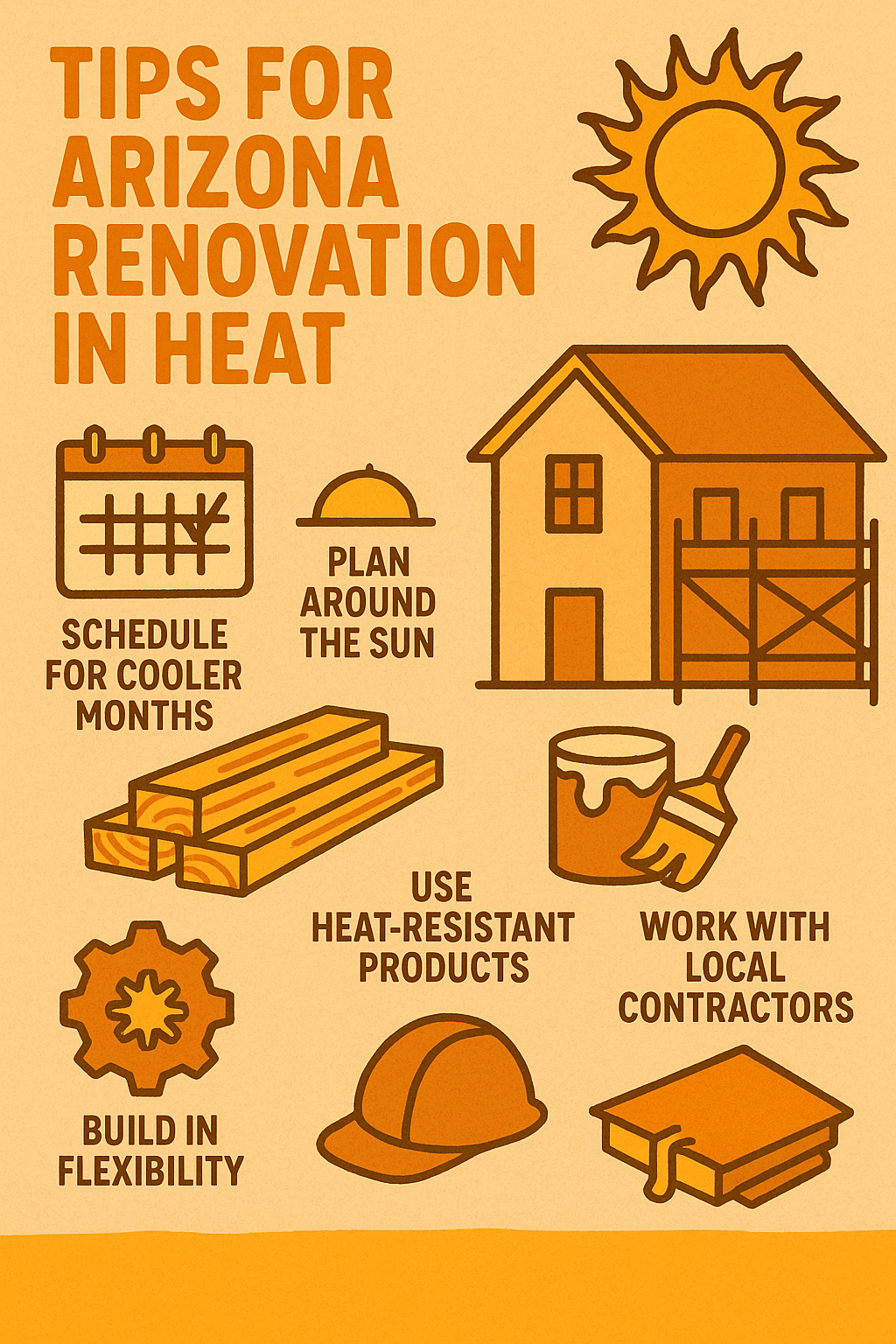
Renovating in Arizona’s climate doesn’t have to be stressful or unpredictable. With the right planning and a contractor who understands local conditions, it’s possible to keep your project on schedule, protect your investment, and get high-quality results despite the intense desert heat. Here are some key strategies professionals use to manage renovations in extreme temperatures.
1. Schedule major work for cooler months when possible.
Spring, fall, and even Arizona’s mild winter months are ideal for extensive projects like additions, roofing, or major concrete pours. Working outside the peak summer season can reduce heat-related delays and help keep crews comfortable and efficient.
2. Plan daily schedules around the sun.
For projects that can’t wait, early mornings and evenings are prime working hours. Professionals often start before sunrise to complete weather-sensitive tasks like painting, pouring, or framing before the heat becomes excessive.
3. Protect materials from direct sun exposure.
Shading, covering, or storing materials in controlled conditions prevents warping, cracking, or premature curing. A contractor who understands Arizona’s climate will coordinate deliveries and stage materials strategically to avoid damage.
4. Invest in the right finishes and adhesives.
Some paints, sealants, and bonding agents are specifically formulated to withstand high temperatures. Using products designed for desert climates reduces the risk of failure and ensures a longer-lasting finish.
5. Build flexibility into your timeline and budget.
A rigid plan that ignores weather factors can lead to rushed work or costly re-dos. Experienced contractors include contingency time and costs for unexpected delays caused by extreme heat, keeping surprises to a minimum.
6. Work with a local contractor experienced in desert conditions.
Arizona home renovations have challenges that contractors from cooler regions may not anticipate. A local expert knows how to schedule, store, and install materials for long-lasting, heat-resistant results.
Renovating in the Arizona heat requires careful coordination, but with proper planning and the right team, your project can stay on track and deliver results that stand up to the desert climate year after year.
Planning Your Arizona Renovation with Confidence
Renovating a home in Arizona’s extreme climate comes with unique challenges, but with the right team and preparation, those challenges turn into opportunities for a stronger, longer-lasting result. Understanding how the heat affects materials, timelines, and budgets is the first step toward a successful project. The next step is working with a contractor who knows exactly how to navigate these conditions from start to finish.
At Drill Renovations, we bring years of experience handling Arizona’s toughest remodeling challenges. We plan around the climate, protect your investment at every stage, and deliver high-quality craftsmanship that stands up to the desert environment for years to come. Whether you’re planning a full home addition, a kitchen remodel, or a major structural renovation, our team ensures the process runs smoothly and efficiently despite the heat.
If you’re ready to start your Arizona home renovation project with a team that understands the climate as well as construction, contact us today. We’ll help you create a plan that protects your budget, your schedule, and your vision—no matter how high the temperatures climb.
Arizona Heat FAQ:
Yes, Arizona’s extreme heat can impact everything from concrete curing to paint adhesion. Contractors who understand the climate know how to schedule work and protect materials to avoid damage.
Fall and winter are the best seasons for renovations in Arizona because temperatures are cooler, which reduces delays, improves working conditions, and helps materials set properly.
You can, but it requires additional planning. Contractors often adjust work hours, use shaded work areas, and store materials properly to prevent heat-related issues.
High heat can shorten working hours, require extra curing time for concrete, and cause schedule changes to protect both workers and materials.
It can. Extreme temperatures may require specialized materials, cooling equipment, or longer project timelines, which can increase overall costs if not planned for upfront.
Heat-resistant adhesives, UV-protected finishes, high-temperature-rated paints, and durable roofing materials are ideal for Arizona homes to withstand sun and heat exposure.
Professionals use shade coverings, climate-controlled storage for materials, and schedule heat-sensitive work during early mornings or evenings to prevent damage.
Look for a local contractor with proven experience handling projects in extreme heat. Ask about their climate-specific strategies for scheduling, material handling, and long-term durability.