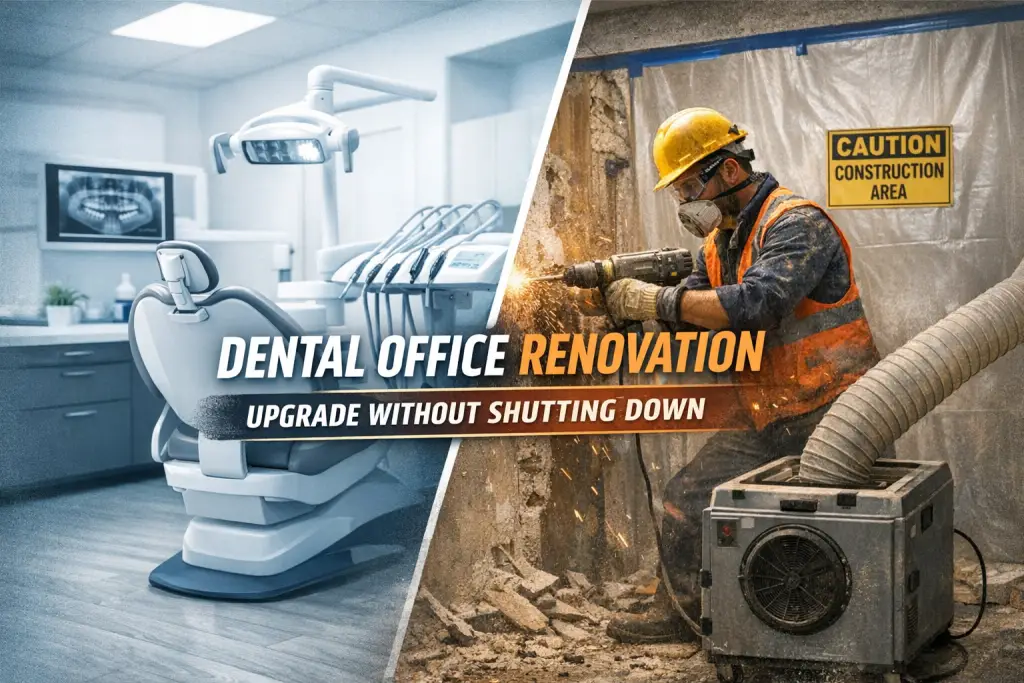
For most dental practices, closing the office even for a few days can mean lost production, disrupted patient schedules, and unnecessary stress for staff. At the same time, outdated finishes, inefficient layouts, and aging equipment can quietly impact patient perception and workflow every day. The good news is that a dental office renovation does not automatically require shutting your doors. With careful planning, phased construction, and strict dust and infection control measures, it is possible to modernize your space while continuing to care for patients. The key is strategy, not speed.
Start With a Phased Renovation Plan
The biggest mistake in a dental office renovation is trying to update everything at once. A phased construction plan allows your practice to stay operational by dividing the space into manageable zones. Instead of shutting down the entire office, you can renovate one operatory, hallway, or section at a time.
This approach keeps sterilization areas, the front desk, and a portion of treatment rooms fully functional. It also gives your team time to adjust as improvements are completed in stages. For many dental practice remodeling projects, working in phases is what makes staying open realistic. It requires coordination, but it prevents a total interruption to patient care and daily production.
Prioritize Infection Control and Dust Containment
In a healthcare setting, dust control is not just about cleanliness. It is about safety and compliance. Construction debris can travel farther than most people expect, especially in spaces with shared HVAC systems. During a dental office renovation, proper containment measures protect both patients and equipment.
Temporary plastic barriers with sealed seams and zipper access points help isolate construction zones. Negative air machines can pull airborne particles away from active treatment areas. HVAC vents should be covered or adjusted to prevent dust circulation. These steps allow construction to happen while maintaining a professional, hygienic environment.
When infection control is treated as a priority from the start, the renovation feels organized rather than disruptive. Patients should feel confident walking into your office, even if improvements are underway behind a barrier.
Communicate Clearly With Staff and Patients
A renovation can run smoothly behind the scenes, but if communication is unclear, it will still feel disruptive. Before construction begins, meet with your team to review the timeline, affected areas, and any temporary workflow changes. Front desk staff should know what to expect so they can confidently answer patient questions.
Adjust scheduling on days when louder work is planned. Block off certain appointment types if needed. Clear signage can guide patients around temporary detours and prevent confusion in shared hallways. Even a simple notice in appointment reminders can set expectations and prevent surprises.
When staff feels informed, they remain calm. When patients feel informed, they remain confident. Strong communication turns what could feel like an inconvenience into a visible sign that your practice is investing in improvement.
Protect Sensitive Equipment
Dental equipment is precise, expensive, and sensitive to both dust and vibration. During a dental office renovation, protecting operatories, imaging systems, and sterilization units should be part of the construction plan from day one.
Treatment chairs and cabinetry should be fully covered and sealed when nearby work is happening. Digital imaging equipment, including X ray units and scanners, may need additional protection or temporary relocation depending on the scope of demolition. Even vibrations from cutting into walls or floors can affect calibration if precautions are not taken.
Electrical upgrades should be coordinated carefully to avoid unexpected shutdowns during patient care. Clear planning between your contractor and equipment providers reduces the risk of costly damage or downtime. When protection is handled proactively, your practice can continue operating with confidence while improvements move forward around you.
Schedule Loud or Disruptive Work Strategically
Not all construction tasks are equal. Some updates can happen quietly during office hours, while others, like demolition, drilling, or saw cutting, can interfere with patient care. Planning when those activities occur makes a significant difference.
Many dental practice remodeling projects schedule the loudest work early in the morning, in the evening, or on weekends. This approach protects high production hours and reduces stress on both patients and staff. If utility shutoffs are required for electrical or plumbing upgrades, they should be coordinated around the lightest appointment blocks.
Strategic scheduling keeps your clinical flow intact. Instead of reacting to noise or interruptions, you are controlling when and how they occur. That level of planning is what allows a renovation to move forward without forcing the practice to close.
Consider Temporary Operatories or Flexible Solutions
If your renovation includes multiple treatment rooms, maintaining production may require creative solutions. Some practices temporarily convert consultation rooms or unused office space into short term operatories. Others shift certain procedures to specific days while construction is happening in another zone.
The goal is to protect your core services. Hygiene appointments, high production procedures, and essential treatments should remain prioritized in the schedule. With a phased dental office renovation, you can rotate rooms offline and back online as each phase is completed.
Planning for flexibility ahead of time prevents last minute scrambling. When you know exactly which spaces will be affected and for how long, you can adjust workflow in a controlled way. That preparation keeps both patient care and revenue steady during the remodeling process.
Focus on Long Term Return on Investment
Renovating while staying open requires planning and coordination, but the long term benefits make the effort worthwhile. An updated dental office does more than improve appearance. It improves workflow, patient comfort, and staff efficiency.
Modern lighting, updated finishes, and a refreshed waiting area immediately elevate patient perception. Clean lines, improved acoustics, and thoughtful layout changes can reduce stress for both patients and your team. Even small upgrades, like better storage or improved sterilization flow, create daily operational gains.
A well planned dental office renovation is not just cosmetic. It is a strategic investment in your practice’s growth. When patients see that you are reinvesting in your space, it reinforces trust. When staff works in a more efficient environment, morale improves. Staying open during construction protects short term revenue, and the finished space strengthens long term value.
Common Mistakes That Force Dental Offices to Close
Even practices that intend to stay open during a renovation sometimes find themselves shutting down temporarily. In most cases, the closure could have been avoided with better planning.
Starting demolition without proper containment is one of the biggest missteps. If dust spreads into treatment areas, patient care may need to pause for cleaning and compliance reasons. Poor scheduling coordination can also disrupt production if loud work overlaps with procedure blocks. Failing to plan for utility shutoffs, especially electrical or water interruptions, can bring the day to a halt.
Another common issue is underestimating how sensitive dental equipment is to dust and vibration. Without proper protection, even minor damage can cause unexpected downtime. A successful dental office renovation requires more than construction skill. It requires understanding how the practice functions day to day and building the plan around it.
Final Thoughts: Renovate Without Interrupting Care
Updating a dental office does not have to mean closing your doors. With phased construction, strict dust control, strategic scheduling, and clear communication, your practice can continue serving patients while improvements take shape.
The key is preparation. When the renovation plan is built around clinical flow rather than convenience alone, disruption stays minimal. The result is a modernized, efficient space that supports patient care without sacrificing momentum during the process.
Renovating Your Dental Office FAQ:
Yes, most dental offices can remain open during renovation with a phased construction plan and proper dust containment measures. By isolating work areas and scheduling disruptive tasks outside peak hours, practices can continue seeing patients safely and efficiently.
The timeline depends on the scope of work. Cosmetic updates may take a few weeks, while full layout changes or equipment upgrades can extend several months. Phased remodeling allows treatment rooms to rotate offline without shutting down the entire practice.
Dust control typically includes sealed plastic barriers, negative air machines, HVAC protection, and strict cleanup protocols. These measures help prevent construction debris from entering active treatment areas and protect both patients and equipment.
Many practices choose slower seasons or schedule the most disruptive work during evenings and weekends. The best timing depends on patient volume and staffing, but thoughtful scheduling helps minimize impact on production.